Disclaimer: This article is for informational and educational purposes only. It does not constitute financial, legal, tax, or technical advice. References to any brands or gateways do not imply endorsement unless stated otherwise.
Key Takeaways
- MSIC code helps payment providers classify merchant risk during onboarding.
- Misalignment between your MSIC and real operations can trigger delays, restrictions, or rejection.
- Higher-risk industries usually face enhanced due diligence, extra documents, and closer monitoring.
- Cleaner MSIC alignment improves approval speed, stability, and fewer account limitations.
- MSIC hygiene matters more as e-Invoicing rolls out in phases (Aug 2024 onward) and has become mandatory for most SMEs by 1 Jan 2026.
In Malaysia, many businesses assume payment gateway approval depends mainly on revenue, website quality, or transaction volume. Those do matter, but one often overlooked factor can strongly influence what happens behind the scenes: your SSM business code, also known as your Malaysia Standard Industrial Classification (MSIC) code.
Payment providers commonly use MSIC as one input alongside your products, refund policy, website content, and projected volumes, to help classify merchant risk and decide what onboarding checks apply.
This becomes even more relevant as reporting expectations rise, especially with e-Invoicing implemented in phases, and becoming mandatory for many businesses over 2024–2026 (with a major threshold on 1 January 2026 for taxpayers up to RM5 million turnover/revenue).
What is an MSIC Code (SSM Business Code)?
MSIC is Malaysia’s standard framework for classifying economic activities. It’s maintained by the Department of Statistics Malaysia (DOSM) and used to categorise entities by their primary activity.
When registering with SSM, businesses select business codes to reflect what they do. SSM’s BizCodEX states that SSM business codes are based on MSIC 2008 Version 1 provided by DOSM (and BizCodEX helps the public find appropriate codes based on activities).
Key characteristics of MSIC codes:
- Standardised classification across industries.
- Used across government and platform workflows (for example, business code lookup and e-Invoicing code references).
- Helps communicate your business nature or activity in a structured way.
- Often influences what banks, regulators, or payment providers request, because it signals what your business does.
Where To Find And Verify Your MSIC (Official Tools)
Before you apply for a payment gateway, verify that your MSIC is as close as possible to your actual primary activity.
- SSM BizCodEX (official explainer and access points).
- SSM4U BizCodEX portal (service access).
- DOSM economic classifications (MSIC publications listings, including newer releases).
Note: These tools assist with identification, but you remain responsible for ensuring your MSIC accurately reflects your business activities.
Why MSIC Code Matters For Payment Gateway Approval
Your MSIC code can influence how payment providers assess your merchant risk profile.
Payment gateways and acquirers manage fraud, disputes, refunds, delivery risk, and compliance exposure. Industry classification helps them decide whether your business is likely to need extra checks, additional documentation, or tighter controls.
That’s also why MSIC is useful beyond onboarding: if you are comparing and choosing between payment service providers, your business category can affect approval speed, settlement terms, and account safeguards. When evaluating options, it helps to look at more than pricing: factors like industry fit and risk appetite matter when choosing a payment service provider that would not surprise you later with restrictions.
Why this matters:
- Higher-risk industries may trigger enhanced due diligence and extra document requests.
- Some categories may be restricted by provider policy (or by acquiring partners).
- Monitoring intensity and settlement terms may differ across risk tiers.
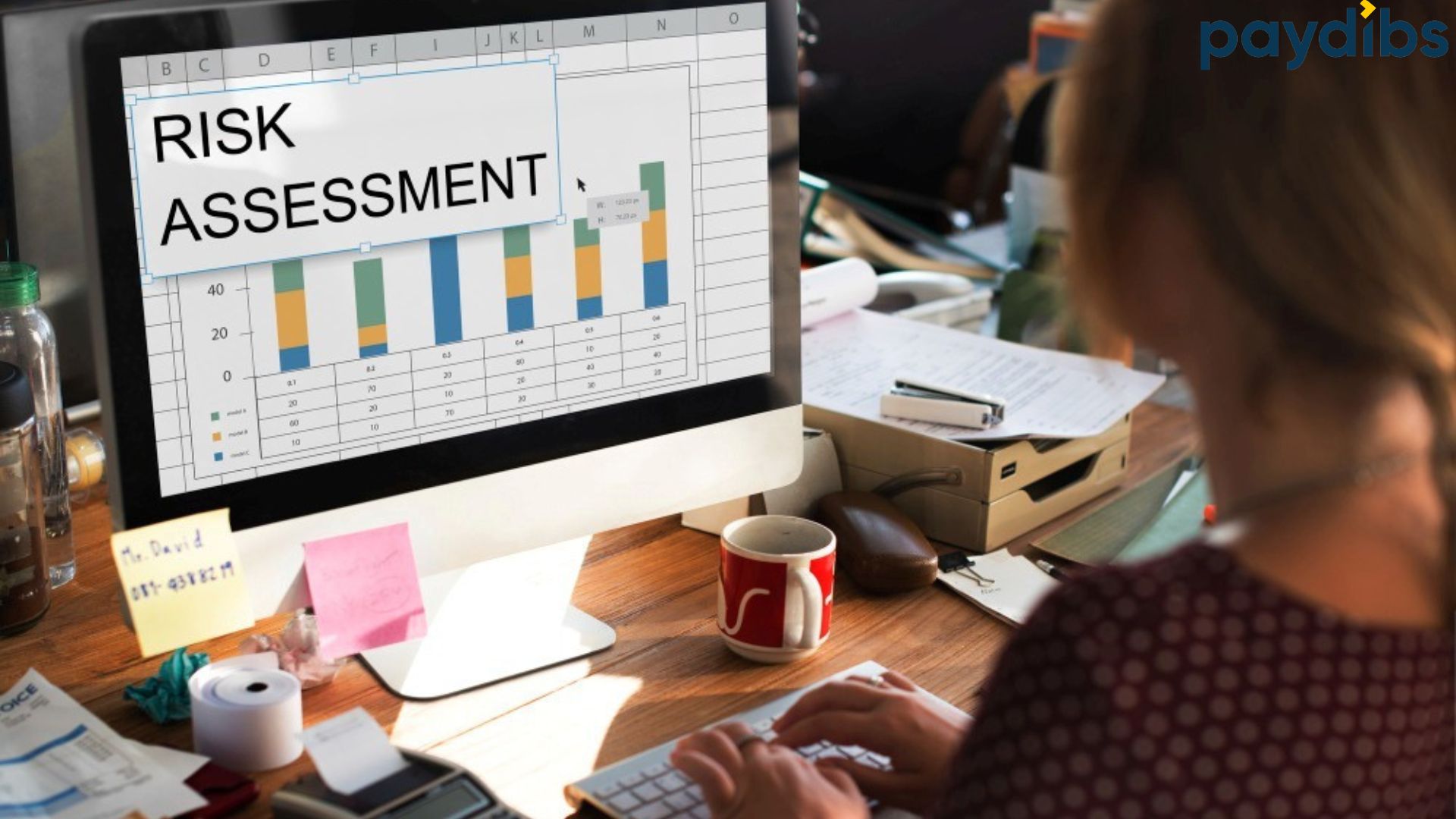
How Payment Gateways Use MSIC Codes In Risk Assessment
1) Risk Categorisation Framework
Payment providers often map business activities into internal tiers. MSIC helps place you into an initial category, then your website and product details confirm whether that categorisation makes sense.
Illustrative examples:
- Lower-risk: Physical retail, basic services with clear delivery, education/training.
- Medium-risk: Subscriptions, marketplaces, on-demand services, cross-border-heavy ecommerce.
- Higher-risk: Models with elevated fraud or dispute exposure, refund-heavy categories, regulated or sensitive activities.
Note: Risk classification varies by provider; these are general examples only, not guarantees of how any specific gateway will treat your MSIC.
2) Compliance And Regulatory Screening
MSIC can guide what a provider checks first:
- Business verification and beneficial owner details.
- Consistency between your stated activity and what customers will actually buy.
- Industry-specific questions (for example, licensing, delivery process, refund/cancellation terms).
3) Transaction Monitoring And Limits
MSIC category may influence:
- Transaction limits and velocity controls.
- Settlement cycles.
- Monitoring thresholds (including manual review triggers).
4) Merchant Account Structuring
For certain models, providers may apply safeguards such as:
- Rolling reserves.
- Delayed release or escrow for higher delivery-risk models.
- Conditional approvals (for example, capped monthly volume at the start).
Why Acquirers Care: The Risk-Based Onboarding Reality
Approval is not just a technical integration. It is a risky decision.
Providers want confidence that:
- You are doing what you say you are doing.
- Customers will receive what they paid for.
- Refund and cancellation terms are clear.
- Your model would not generate unmanageable dispute volume.
That is why inconsistency is a major onboarding killer. If your MSIC suggests “consulting,” but your website sells physical goods, subscriptions, or event tickets, the provider sees mismatch, and mismatch leads to deeper reviews.
Common MSIC-Related Issues That Affect Approval
Mismatch Between Business Activity And MSIC Code
If your actual operations differ from your registered MSIC, it raises flags during onboarding.
Overly Broad Or Generic Classification
Vague MSIC choices make it harder for providers to understand your model quickly, leading to delays and extra verification.
Incorrect Primary Activity Selection
Payment providers usually focus on your primary activity. If your primary MSIC doesn’t match how you earn most of your revenue, your risk profile may be assessed incorrectly.
Outdated Business Information
If your business pivots, update your MSIC with SSM to maintain alignment and reduce future disruption.
Real-World Scenarios: How MSIC Impacts Approval
- Smooth approval: Clear MSIC alignment with website and products.
- Delayed approval: Generic MSIC triggers deeper review and more questions.
- Conditional approval: Higher-risk model approved with caps, reserves, or longer settlement cycles.
- Rejection/reapplication: Misalignment leads to rejection until clarified or updated.
Different providers define risk differently, but these models commonly receive closer scrutiny because they correlate with disputes, delivery risk, or fraud patterns, especially with chargeback exposure.
- Digital goods / instant delivery (customers may claim “not received”).
- Subscription billing (cancellation disputes are common).
- Travel, events, pre-orders (delayed fulfillment increases refund pressure).
- Cross-border-heavy merchants (verification and fraud controls are tighter).
- Marketplaces (third-party seller and fulfillment risk).
High-risk does not mean “bad.” It usually means “more checks” and “more controls,” and it is also why having clear policies and fulfillment proof matters: fewer misunderstandings typically means fewer disputes.
How To Choose The Right MSIC Code For Payment Readiness
- Align with your primary revenue activity: Choose what drives most income today.
- Be specific, not generic: Specificity reduces ambiguity and speeds review.
- Match what customers will see: Ensure your website, checkout flow, and policies reflect the same activity.
- Update when your business evolves: If your model changes materially, update your records with SSM.
MSIC Code And Malaysia’s 2024–2026 e-Invoicing Landscape
Malaysia’s e-Invoicing is implemented in phases, and the official timeline (updated 7 December 2025) states that taxpayers with turnover/revenue up to RM5 million begin on 1 January 2026, while taxpayers with turnover/revenue less than RM1,000,000 are exempt (subject to stated criteria).
MSIC codes also appear in MyInvois SDK code references, which is another reason to keep your classification consistent across SSM records, invoicing fields, and onboarding forms.
Checklist to Prepare For Faster Gateway Approval
- Confirm your MSIC and SSM activity match what you sell today.
- Make your website clear: products/services, pricing, contact details, and business info.
- Display key policies: refunds/returns, cancellations (if subscription), delivery timelines.
- Prepare core documents: SSM registration, bank details, and supporting info (products/services, fulfillment proof if requested).
- Be ready to explain your payment model: one-time sales, subscription, deposits, marketplace, cross-border.
Understanding How a SSM Business Code Can Affect Your Business
Your MSIC code is not just a registration detail, it is a signal that can affect how smoothly a payment provider can assess your business. When your MSIC, website, products, and policies align, you reduce uncertainty and lower the risk of delays or account limitations.
Paydibs is a payment gateway provider that helps merchants become approval-ready by tightening MSIC alignment and polishing the information underwriters typically look for, so onboarding is smoother and more stable as you scale.