Disclaimer: This article is published by Paydibs and is intended for general informational purposes only. It reflects current perspectives on AI-powered commerce and digital payment trends and does not constitute technical, financial, or operational advice. Future technologies and use cases described are illustrative and may evolve over time. Businesses should assess their own requirements and seek independent professional advice before implementing new systems or payment solutions.
The retail landscape in Malaysia is undergoing a massive structural shift. While traditional website checkouts remain important, customers increasingly expect faster and more interactive purchasing experiences. Today, artificial intelligence is stepping out of data science labs and onto the retail floor, reshaping how Malaysian consumers interact with local businesses.
For over two decades, e-commerce infrastructure has been designed around visual persuasion: beautifully laid-out landing pages, carefully positioned checkout forms, and predictable click paths. But consumer behavior is shifting. With the rise of advanced conversational AI chatbots alongside smart, automated physical touchpoints, the traditional checkout flow is evolving to meet these expectations.
Businesses that adopt AI-enabled workflows alongside real-time payment methods may be better positioned to adapt to evolving digital retail trends. Here is how conversational commerce and smart automation are redefining the local market, and how your business can prepare for it.
The 3-Phase Journey of an AI-Driven Customer Sale
Unlike traditional automation, like a standard monthly gym subscription or utility bill that processes passively, AI-driven commerce thrives on dynamic, interactive customer journeys.
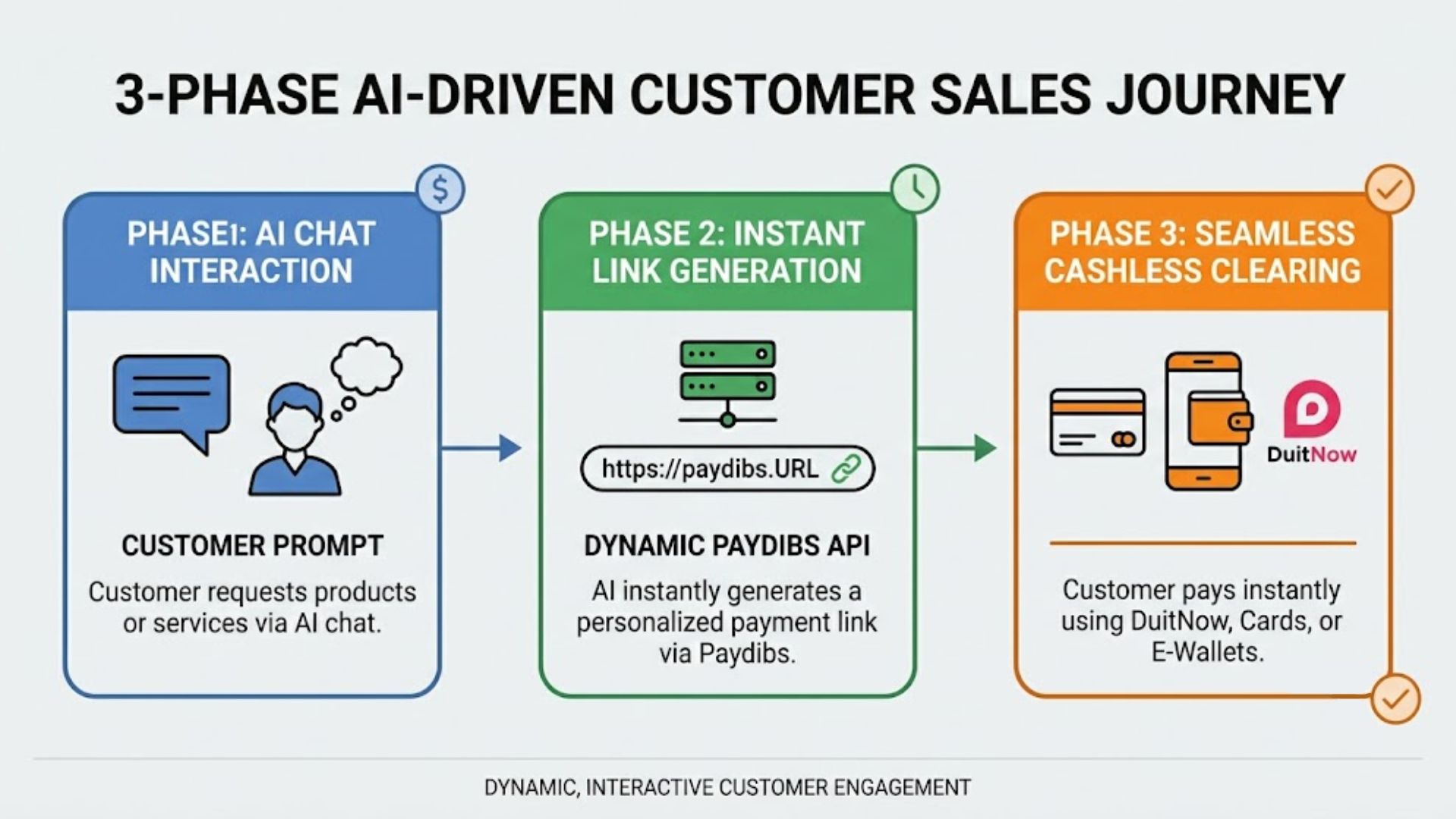
In the modern retail environment, a consumer’s purchase flow now looks like this:
- The Intent (Conversational AI): A customer reaches out to an online retail boutique or B2B supply store via a WhatsApp business account. Instead of clicking through categories, they type: “I need three ergonomic office chairs in black delivered to my office in Bukit Bintang by Friday morning. Do you have stock, and what’s the total price?” An AI assistant integrated with inventory and order management systems can check stock availability, estimate delivery costs, and provide an immediate response.
- The Handshake (Dynamic Checkout): Once the customer confirms the order within the chat window, the customer typically prefers not to switch apps, manually log in to a web browser, or fill out a fresh form. The AI workflow can then trigger a payment request through a secure payment gateway such as Paydibs, generating a secure payment link pre-filled with the transaction amount.
- The Instant Settlement: The customer clicks the link directly inside the chat window, pays securely via their preferred local method, and the merchant’s system automatically logs the transaction, kicking off the fulfillment process in seconds.
Bridging Online AI and Physical Automated Hardware
The AI revolution isn’t just happening on mobile phone screens; it is rapidly transforming physical retail spaces across Malaysia. We see this explicitly in the massive boom of unattended commerce including self-service laundromats, automated beverage dispensers, order kiosks, and high-tech vending machines.
Modern automated kiosks use smart software to track real-time inventory, monitor customer traffic patterns, and dynamically manage operational efficiency.However, advanced backend software requires a similarly agile in-person payment system to fully realise its efficiency.

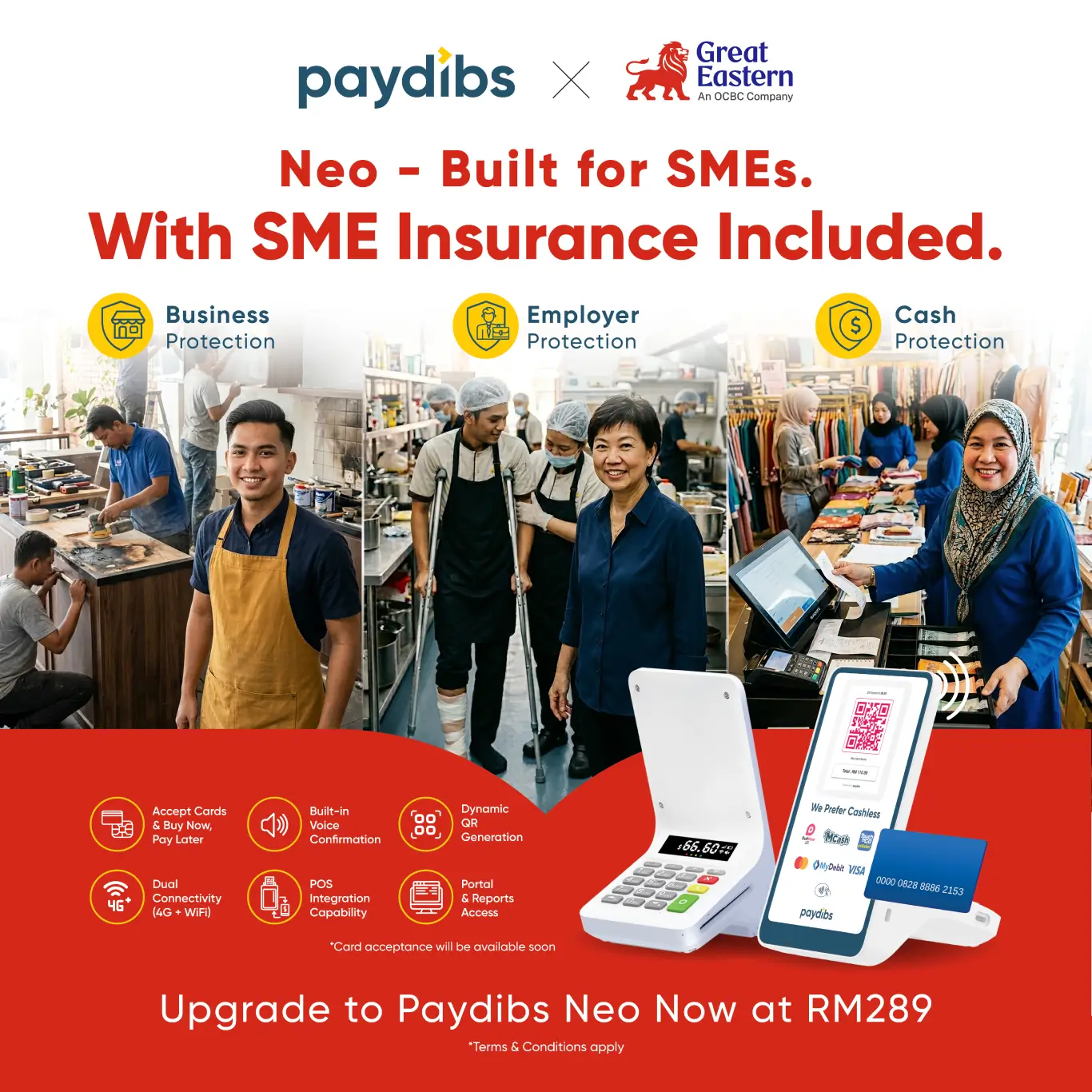
Some payment hardware solutions, such as smart terminals like Paydibs NEO, can help bridge this gap. By integrating smart payment terminals or native Android/iOS SDKs directly into unattended kiosks, businesses can help enable smoother purchase completion across multiple payment methods.
3 Payment Infrastructure Requirements for AI-Driven Commerce
To capture high-intent traffic and retain tech-savvy consumers, Malaysian SMEs and enterprise platforms must future-proof their payment operations. Here are three critical pillars to focus on:
1. Consolidate Local Payment Channels
Malaysian consumer payment behavior is highly diverse. While card networks remain essential for major corporate procurement, localised payment channels dominate everyday retail. A unified payment gateway reduces integration complexity while ensuring customers can pay using their preferred method.
- DuitNow Online Banking/Wallets (DOBW): The national standard for seamless account-to-account (A2A) transfers.
- Local E-Wallets: Providing frictionless micro-payments through Touch ‘n Go eWallet, GrabPay, Boost, and ShopeePay.
2. Leverage AI-Driven Security Monitoring
As transaction flows accelerate and move into conversational interfaces, modern payment environments face increasingly complex cyber threats. Relying solely on manual oversight leaves your business vulnerable. Advanced gateways combat this by embedding AI-driven transaction monitoring directly into the payment loop. These systems are designed to analyse transaction patterns in near real time to help flag anomalies activity, prevent fraud, and mitigate chargeback risks before a transaction is finalised.
3. Deploy Embedded Operations (Financing & Insurance)
The modern retail terminal is no longer just a digital ledger; it is an integrated business hub. Through strategic fintech partnerships, advanced platforms are embedding critical services right at the point of sale. For instance, businesses utilising the Paydibs infrastructure can now benefit from bundled business insurance directly via their payment terminal, offering immediate protection against operational disruptions, fire, or theft without cumbersome, standalone applications.
Future Trends: What Will AI-Powered Checkout Look Like in the Next 5 Years?
As we look toward the future of Malaysian retail, the intersection of finance and artificial intelligence will expand into several key areas:
- Agentic Purchasing Assistants: AI “agents” authorised by consumers to source, negotiate, and execute micro-payments autonomously based on pre-set budgets.
- Voice Commerce: Fully voice-activated checkouts optimised for smart vehicles and home devices, integrated directly with local banking protocols.
- Dynamic Payment Routing: AI backends that automatically route transactions through the most cost-effective and highest-success-rate payment rails in real time.
- Predictive Fraud Prevention: Deep neural networks that stop sophisticated identity theft and automated card-testing attacks before they hit the merchant account.
Key Considerations When Choosing a Payment Gateway for AI-Powered Commerce
As AI-powered commerce continues to reshape how businesses engage with customers, selecting the right payment gateway becomes increasingly important. Beyond simply processing transactions, modern payment infrastructure must be capable of supporting automated workflows, conversational sales channels, and seamless customer experiences across both digital and physical touchpoints.
1. API and Integration Capabilities
AI-driven customer journeys depend on systems communicating with one another in real time. Whether you’re connecting a WhatsApp chatbot, an e-commerce platform, a CRM, or a custom order management system, a payment gateway should offer well-documented APIs and developer tools that enable smooth integration and automation.
2. Flexible Payment Link Functionality
Payment links have become a critical component of conversational commerce. Businesses should look for gateways that allow secure payment links to be generated instantly and shared through messaging platforms, email, or social channels. This helps reduce checkout friction and enables customers to complete transactions without navigating through multiple pages.
Further reading: Payment Link: Bridge Between Social Conversations and Sales
3. Comprehensive DuitNow Support
As one of Malaysia’s most widely adopted digital payment networks, DuitNow plays a key role in modern payment acceptance. A payment gateway should provide seamless access to DuitNow Online Banking/Wallets (DOBW) and other local account-to-account payment options to meet evolving consumer preferences.
4. Access to Popular E-Wallets
Consumer payment preferences vary across demographics and purchase scenarios. Supporting leading local e-wallets such as Touch ‘n Go eWallet, GrabPay, Boost, and ShopeePay allows businesses to cater to a broader customer base while providing greater payment flexibility at checkout.
5. Strong Security and Compliance Standards
As transaction volumes grow and customer interactions become increasingly digital, security remains a top priority. Businesses should evaluate payment gateways based on their security controls, fraud prevention capabilities, encryption standards, and compliance with recognised industry requirements to help safeguard sensitive payment data.
6. Omnichannel Payment Acceptance
Today’s customers may discover a product through social media, make enquiries via WhatsApp, and complete their purchase either online or in person. An effective payment gateway should support multiple sales channels, including online checkout, payment links, QR payments, mobile payments, and physical POS terminals, ensuring a consistent payment experience wherever customers choose to transact.
For Malaysian businesses looking to build AI-enabled customer journeys, the ideal payment gateway is one that combines local payment coverage, integration flexibility, security, and omnichannel capabilities. By investing in infrastructure that supports both current and emerging commerce models, businesses can better position themselves for the next generation of digital retail.
Building Payment Infrastructure for the Next Generation of Commerce
Whether you are running a fast-growing e-commerce brand automating your social media sales funnel, or an operator rolling out a fleet of intelligent, unattended retail kiosks, the message is clear: your checkout infrastructure plays a critical role in supporting business growth.
Companies that position themselves at the intersection of intelligent customer experiences and efficient local payment processing are better positioned to capture future market share.
Whether you’re accepting payments through WhatsApp conversations, integrating payment links into AI workflows, or deploying smart kiosks, Paydibs can help provide the payment infrastructure to support Malaysian businesses in collecting payments securely and efficiently, depending on the chosen solution and implementation.