Disclaimer: This article is for informational and educational purposes only. It does not constitute financial, legal, or technical advice. References to any brands or gateways do not imply endorsement unless stated otherwise.
Key Takeaways
- MSIC code classifies your business activity and affects compliance across SSM, LHDN, and licensing
- Choosing the correct primary activity ensures smoother approvals for tax, grants, and financing.
- Incorrect MSIC codes can lead to compliance risks, audit issues, or rejected applications.
- MSIC codes are more operationally important as Malaysia’s e-Invoicing reaches smaller businesses in 2026.
- Businesses should select the most specific 5-digit code based on revenue-driving activity.
If you are registering or operating a business in Malaysia, you will eventually encounter the term MSIC code. Many business owners treat it as a simple checkbox during registration, but in reality, it plays a central role in how your business is classified, regulated, and evaluated.
From incorporation with the Companies Commission of Malaysia to tax reporting records with the Inland Revenue Board of Malaysia (IRBM), your MSIC code affect how government agencies classify your business for licensing, taxation, grants, and regulatory reporting.
In 2026, as Malaysia’s e-Invoicing implementation reaches smaller businesses under the phased rollout, the MSIC code becomes more than just an administrative detail. It is now part of your day-to-day business operations.
What is an MSIC Code?
An MSIC code (Malaysia Standard Industrial Classification) is a five-digit classification system used to identify the primary business activity of a company in Malaysia.
It is developed by the Department of Statistics Malaysia (DOSM) and aligned with the global International Standard Industrial Classification (ISIC) framework.
Think of it as your business’s official industry identity, a standardised way for regulators, banks, and government agencies to understand what your company actually does.
Why MSIC Codes Matter for Malaysian Businesses
Your MSIC code directly influences how your business is treated across multiple regulatory touchpoints.
Regulatory and Operational Importance
- Company Registration (SSM): Required during incorporation and business profile setup
- Tax Reporting (LHDN): Determines how your business income is categorised and assessed
- Licensing and Permits: Local authorities use MSIC classification to approve business activities
- Grants and Incentives: Many government programmes are industry-specific
- e-Invoicing Compliance (Phased): Business classification fields are used in structured digital reporting
Why This Matters in Practice
If your MSIC code does not accurately reflect your business:
- Your applications may be delayed
- Your compliance filings may be inconsistent
- Your eligibility for funding or incentives may be affected
How MSIC Codes Are Structured
MSIC codes follow a layered structure that becomes more specific as digits increase.
Hierarchy Breakdown
- Section (Alphabet): Broad industry category
- Division (2 digits): General activity
- Group (3 digits): Sub-sector
- Class (4 digits): Detailed classification
- Item (5 digits): Specific business activity
Example
- 47912: Retail sale of any kind of product over the Internet
- 47914: Internet retail auctions
This level of detail allows Malaysia to classify everything from traditional businesses to modern digital models with precision.
You can refer to the MSIC Code List on the Department of Statistics Malaysia or the IRBM official MyInvois SDK MSIC Code List for more details.
How To Find Your MSIC Code (Step-by-Step)
Finding your MSIC code is straightforward, but selecting the correct one requires careful consideration.
Step-by-Step Guide
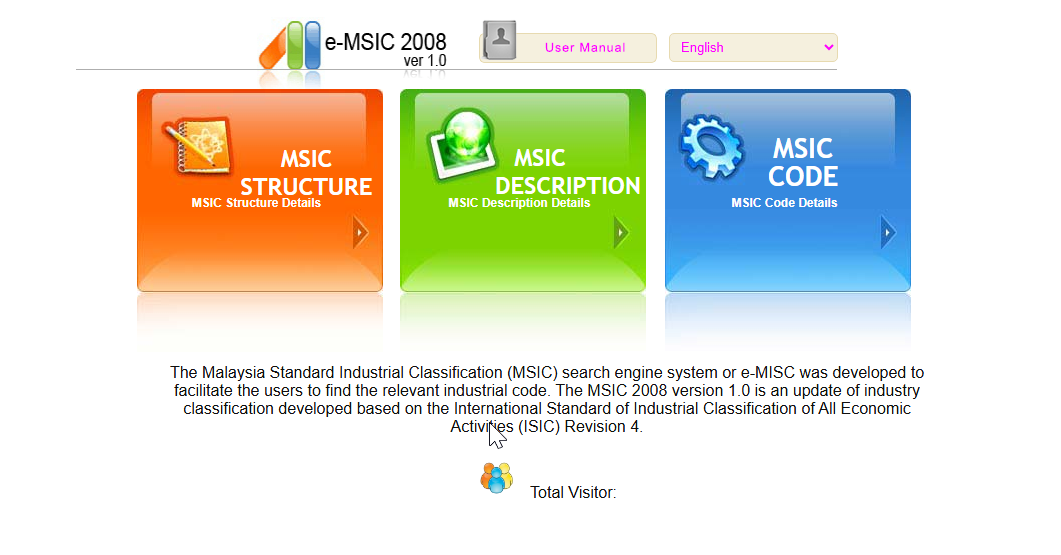
- Visit The DOSM MSIC Directory: Access the official classification list online, where you can search for business activity classifications using several search options.

- Choose Your Search Method:
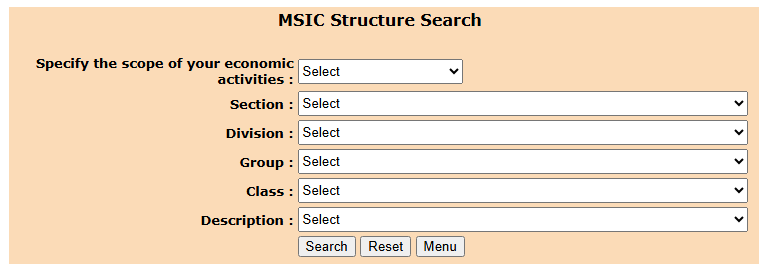
- MSIC Structure: Browse the classification hierarchy by Section, Division, Group, Class, and Item if you’re unsure which category fits your business.
- MSIC Description: Use this method if you know the type of business activity (e.g. “software”, “restaurant”, or “online retail”).
- MSIC Code: Useful if you already have a code and want to verify its description.
- MSIC Structure: Browse the classification hierarchy by Section, Division, Group, Class, and Item if you’re unsure which category fits your business.
- Review Matching Categories: Compare similar classifications carefully
- Select The Most Accurate 5-Digit Code: Choose the code that most accurately represents your primary business activity generating the majority of your revenue.
- Validate Against Revenue Activity: Ensure it reflects your main income source before using the code for SSM registration, tax reporting, or other regulatory purposes.


Alternative Methods
- Check Your SSM Profile: Existing businesses can verify their assigned code
- Use BizCodEX Tool: SSM provides a search tool for classification and mapping
- Consult Professionals: Company secretaries or accountants can advise
Official Tools You Should Use (For Faster, More Accurate Matching)
If you want the most reliable result (and fewer “wrong code” issues later), use these tools in this order:
- DOSM MSIC Directory (Official Reference): This is the primary source for definitions and the official classification structure.
- SSM BizCodEX (Cross-Check and Mapping Tool): BizCodEX helps you map business activities to MSIC and is especially useful if you also deal with other coding systems (e.g., MOF Kod Bidang or CIDB categories) and want consistency.
- MyInvois SDK Code Tables (e-Invoicing Practical Reference): MyInvois provides structured code tables, including MSIC, that commonly appear in e-Invoicing-related validation and system integration work.
Note: These tools assist in identification, but final responsibility for correct MSIC code selection rests with the business owner or their professional advisor.
How To Choose The Right MSIC Code (Critical Decision Framework)
Choosing the right MSIC code SSM is not about what sounds closest, it is about what reflects your actual business model.
A Simple Decision Framework
- Identify Your Main Revenue Driver: What generates the majority of your income
- Understand Your Core Offering: What product or service are customers actually paying for
- Align With Regulatory Intent: Which activity would continue if you stopped everything else? Does your chosen code accurately describe that activity?
Primary vs Secondary Activities
- Primary MSIC Code: Represents your main business function and highest revenue source
- Secondary Activities: Additional services or operations that do not define your core business
Why Businesses Often Get This Wrong
Businesses may change over time. A company that started as a physical retailer may later generate most of its revenue from online sales, while a café may expand into wholesale coffee distribution. Reviewing your MSIC code whenever your primary revenue source changes helps ensure your business records remain aligned with your actual operations.
Real Examples of MSIC Codes in Malaysia (Corrected)
Applying MSIC code SSMs to real-world scenarios helps clarify how they work.
| Business Type | Likely MSIC Code | Description |
| Online seller (standard e-commerce) | 47912 | Retail sale of any kind of product over the Internet |
| Online auctions model | 47914 | Internet retail auctions |
| Cafe / coffee outlet | 56301 or 56302 | Beverage-serving outlets including coffee houses (56301) or coffee shops (56302). Note: 56303 refers to drink stalls/hawkers, not typical cafes. |
| Digital marketing agency | 73100 | Advertising services |
| Software company | 62010 | Core business is software development |
Disclaimer: The examples and descriptions provided are meant to serve as guidelines and may not reflect every nuance of the specific MSIC code applications.
Practical Scenarios
- Social Commerce Sellers: Often closer to online retail (47912) than general trading, depending on your main activity
- Cafe With In-House Baking: Usually still food service unless manufacturing becomes the main revenue driver
- Service-Based Digital Businesses: Classified by core service, not platform used
Common Mistakes Businesses Make
Most MSIC-related issues come from misclassification rather than complexity.
Typical Mistakes
- Choosing A Code That Is Too General: Leads to vague classification and compliance ambiguity
- Selecting Based On Company Name: Instead of actual business activity
- Ignoring Primary Revenue Source: Causes misalignment with regulators
- Failing To Update Codes: When business models evolve, codes must be updated accordingly.
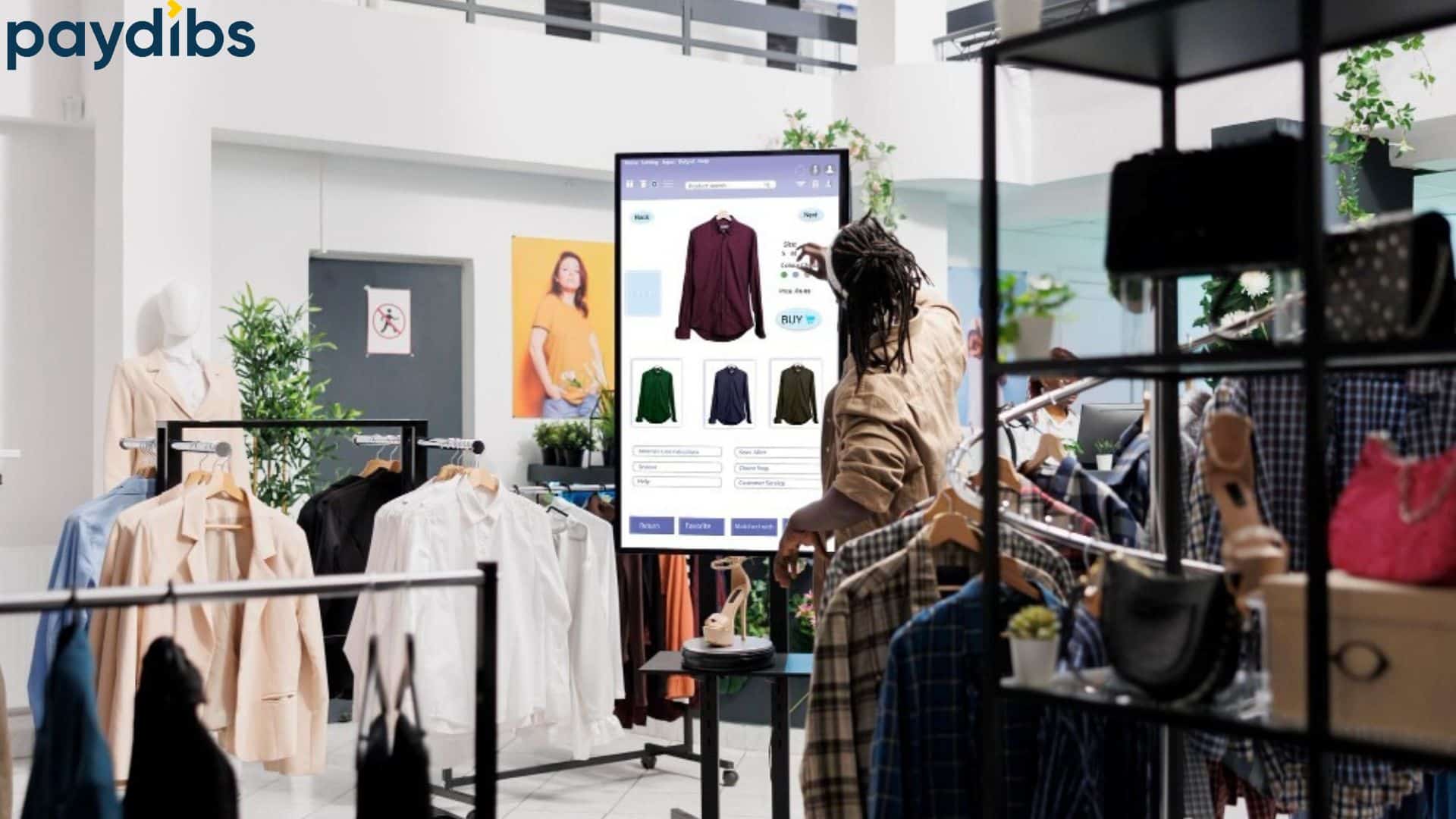
Example: A business that mainly sells clothing through Online Shop and Live may assume “general trading” is the right classification. In reality, if online retail generates most of its revenue, an internet retail MSIC code may be more appropriate than a broad trading classification.
What Happens If You Choose The Wrong MSIC Code
The risks of incorrect classification are often underestimated.
Potential Consequences
- Compliance Issues: Misalignment with regulatory expectations
- Tax Reporting Errors: Incorrect categorisation with LHDN
- Grant Rejections: Ineligible due to wrong industry classification
- Operational Delays: Issues with licensing or approvals
MSIC Code SSM and e-Invoicing in Malaysia (2026 Update)
The introduction of e-Invoicing has made MSIC codes more operationally important as implementation reaches smaller businesses under the phased rollout.
Malaysia’s e-Invoicing initiative by the Inland Revenue Board of Malaysia has been implemented in phases starting from 1 August 2024, with businesses up to RM5 million annual turnover scheduled from 1 January 2026 (Implementation dates are subject to IRBM revision; refer to the official IRBM e‑Invoice timeline for the most current information.)
Because e-Invoicing uses structured business classification data, MSIC codes may be used in supplier profile and reporting fields to support consistent categorisation and validation.
This helps support:
- Consistent Tax Classification: Standardised categorisation across industries
- Structured Reporting: Alignment with digital tax systems
- Regulatory Transparency: Improved monitoring and compliance
(Source: Inland Revenue Board of Malaysia e-Invoice Timeline)
When Should You Update Your MSIC Code
Your MSIC code SSM should evolve alongside your business.
Common Triggers
- Business Model Expansion: Entering new markets or services
- Revenue Shift: Change in primary income source
- Digital Transformation: Moving from offline to online operations
- Regulatory Changes: Compliance updates or new requirements
The MSIC Code and Your Business
Most business owners only think about their MSIC code when registering with SSM. In reality, choosing the right code can affect licensing, tax reporting, grant eligibility, and even payment gateway applications. It is about accurately positioning your business within Malaysia’s regulatory and economic framework. A well-chosen MSIC code reduces compliance risks, smoother business administration, and supports long-term growth.
Choosing the right MSIC code is only one part of building a compliant business. As your operations expand, you will also need systems that support invoicing, payment collection, accounting, and tax reporting. Ensuring these systems work together helps reduce manual work and supports smoother day-to-day operations.
Paydibs, as a payment gateway provider, helps Malaysian businesses accept online or in-store payments through secure, scalable payment solutions that integrate with modern business workflows.