免责声明 The information provided in this blog post is for general informational purposes only. While we strive to provide accurate and up-to-date content, self-service technologies, hardware specifications, and regulatory requirements in Malaysia are subject to change. This content does not constitute financial, legal, or professional advice. Readers are encouraged to conduct their own due diligence or consult with a qualified professional before making any strategic business or financial decisions.
重点摘要
- 在马来西亚, kiosk machine acts as a dedicated self-service terminal, allowing customers to browse, order, and pay without needing direct staff assistance.
- By automating the ordering process, businesses may experience reduced perceived wait times and improved service flow during peak hours.
- The visual interface of a kiosk often leads to a higher average order value through consistent, automated prompts for upgrades and add-ons.
- Modern kiosks are designed to be space-efficient, with countertop or slim-profile models fitting easily into smaller Malaysian retail or F&B layouts.
- Integrating a kiosk with your existing payment infrastructure ensures all sales and inventory data are synchronised in real-time across your business.
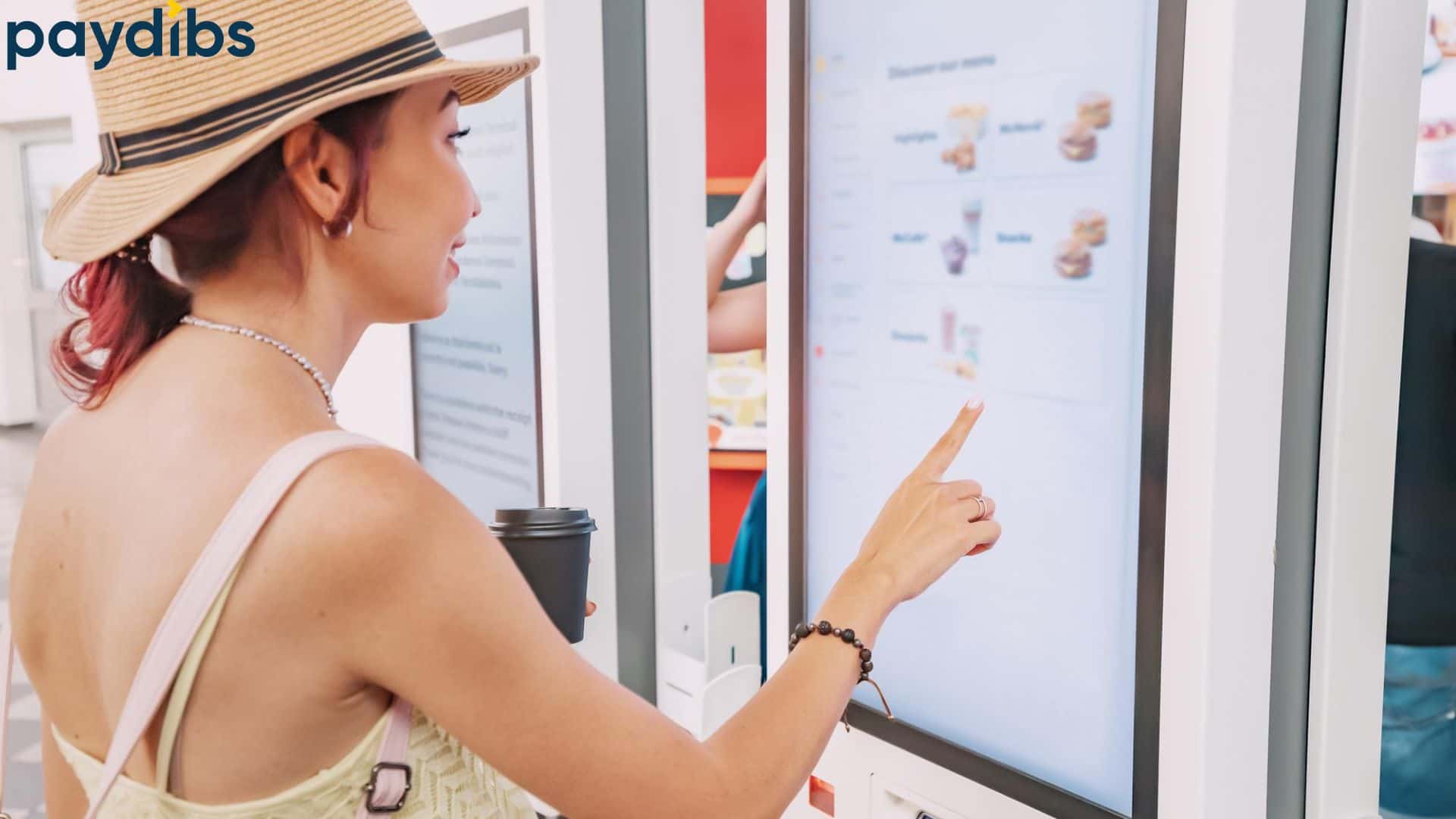
In the evolving landscape of Malaysian commerce, the kiosk machine has transitioned from a niche high-end feature to a practical operational necessity. These self-service terminals serve as a digital extension of your front-of-house team, providing customers with the autonomy to control their own transaction journey from start to finish.
For businesses in high-traffic sectors like Quick Service Restaurants (QSR), pharmacies, or ticketing counters, the primary challenge is often managing the “queue-out” effect during busy periods. A kiosk helps address this by providing additional points of sale that do not require dedicated staffing, effectively increasing your store’s throughput capacity.
The following sections examine how integrating self-service hardware can assist in modernising your business model while maintaining a focus on consistent service quality.
免责声明 The comparison below is for informational purposes only. Features, pricing, and performance may vary based on specific service providers, hardware models, and individual business requirements. Merchants are encouraged to consult with providers for tailored solutions.
Comparison of Kiosk vs. Standard POS Setups
Feature | Self-Service Kiosk Machine | Standard POS Machine |
Primary User | The Customer | The Staff Member |
Main Benefit | Reduced wait times & autonomy | Personalised service & guidance |
Upselling | Automated visual prompts | Manual (staff-dependent) |
Space Use | Public floor or countertop | Behind the counter |
Ideal For | High-volume, routine orders | Complex or personalised service |
Result | Higher throughput & larger tickets | Relationship building & loyalty |
1. The Ordering Kiosk Machine
Streamlining high-volume transactions in F&B and retail.
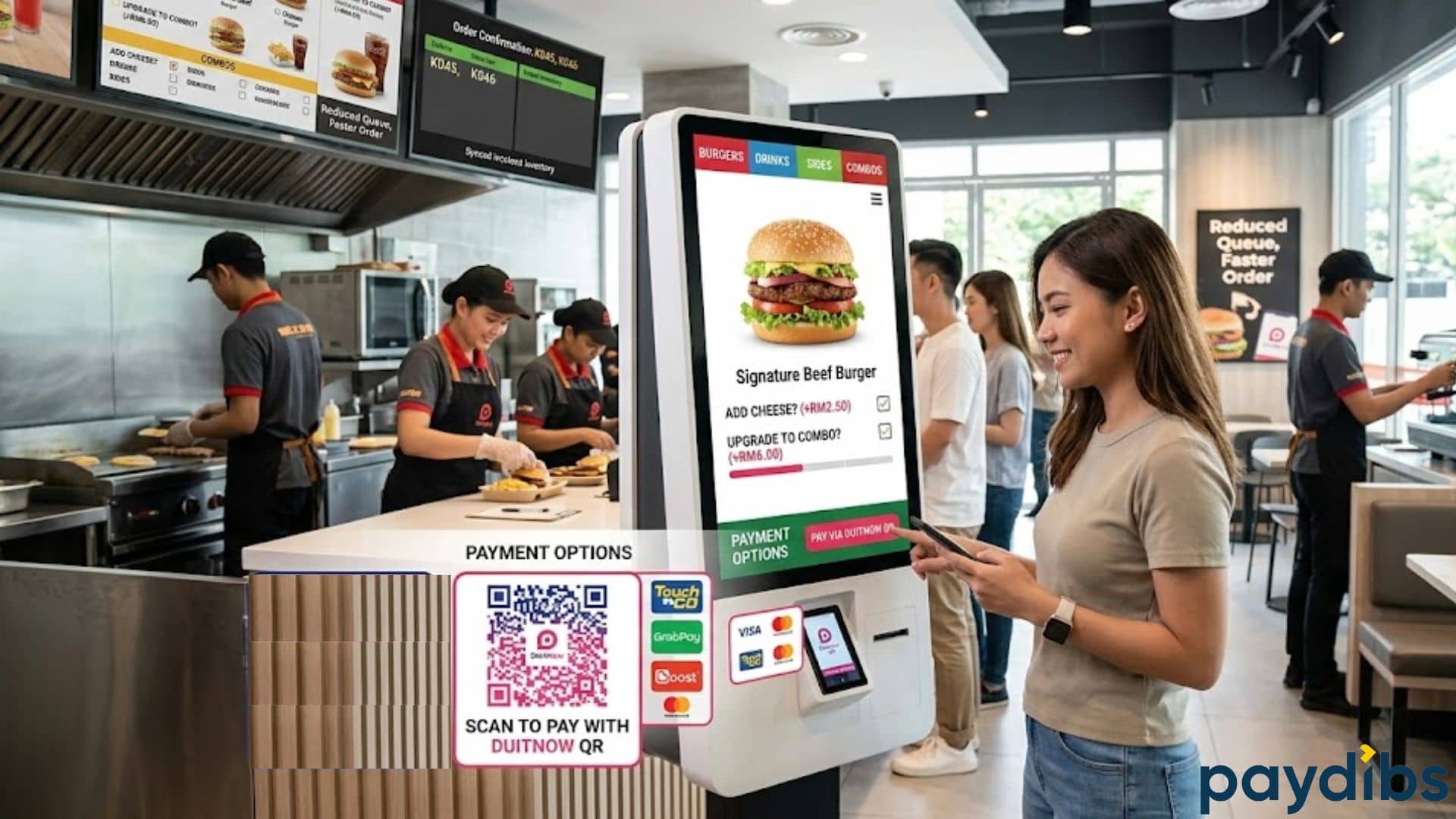
The ordering kiosk machine is designed to handle high volumes of routine transactions with precision. By allowing the customer to input their own orders, the risk of manual miscommunication is reduced. This is particularly valuable in the F&B industry, where complex customisations such as dietary adjustments or meal upgrades, can be clearly selected on-screen.
While kiosks manage the bulk of routine orders, they often work best alongside the to handle more complex customer enquiries or manual overrides at the main counter.
2. Compact and Countertop Kiosk Models
Space-efficient solutions for smaller Malaysian storefronts.
In 2026, the trend has shifted towards compact units. These smaller models offer the same functional power including integrated thermal printers and QR scanners, but with a much smaller physical footprint.
For Malaysian MSMEs with limited floor space, these compact units can be placed on existing counters or wall-mounted and pair with a 支付终端 to handle any supplementary card or e-wallet payments that happen outside the kiosk. This allows businesses to offer a self-service option without requiring a major store renovation, making digital transformation more accessible for independent cafés and boutique retailers.
3. Improving Customer Throughput
Managing peak-hour crowds and reducing perceived wait times.
One of the most immediate impacts of installing a kiosk machine is the reduction in queue congestion. When a customer sees a long line at the main counter, they may choose to leave. Providing a self-service alternative keeps those customers in-store by offering a faster, more convenient checkout route.
Studies in the retail sector suggest that customers often perceive their wait time to be shorter when they are actively engaged with a self-service screen rather than standing passively in a line. This shift in customer flow allows your staff to focus on higher-value tasks, such as food preparation or providing detailed product advice to those who require it.
4. Real-Time Data and Inventory Sync
Ensuring operational consistency across all sales channels.
A modern kiosk machine does not operate in isolation. It is typically integrated with your central management system, ensuring that every order placed by a customer is instantly reflected in your inventory and sales reports.
This synchronisation is crucial for maintaining operational consistency. For example, if an item goes out of stock, the kiosk menu can be updated automatically across all locations, preventing customers from ordering unavailable products. This level of automation reduces the administrative burden on your team and provides a more reliable service experience.
5. Security and Seamless Payment Integration
Supporting a wide range of local and international payment methods.
Reliability in payment processing is a key feature of a professional kiosk machine. These units are built with secure, EMV-certified payment modules that handle everything from credit and debit cards to local e-wallets and DuitNow QR.
By using a system regulated by Bank Negara Malaysia, merchants ensure that their self-service transactions are protected by the same rigorous security standards as their counter-based sales. This built-in trust encourages customers to use the self-service option, knowing their data and funds are handled within a secure, compliant infrastructure.
Conclusion: Strategic Growth Beyond Hardware
Adopting a kiosk machine is a strategic step towards operational maturity, allowing you to serve more customers with higher precision. While hardware provides the physical touchpoint, the long-term success of your automation depends on the reliability of the “digital plumbing” beneath it.
Even if you aren’t ready for a full kiosk rollout today, ensuring your business is supported by a robust 支付网关 is the first step in digital readiness. A secure gateway partner like Paydibs ensures that whether you sell through a terminal, a self-service kiosk, or an online store, your transactions are protected by BNM-regulated standards and settled with the speed your cash flow requires. By choosing an infrastructure that scales with you, you ensure that your business remains competitive in Malaysia’s fast-moving digital economy.