免责声明: This article is for general informational purposes only and does not constitute tax, legal, or regulatory advice. Tax rules, reporting requirements, and system integrations may change. Businesses should verify requirements with LHDN or qualified professionals before making compliance decisions.
Key Takeaways
- A tax identification number is used to identify individuals and businesses for tax and reporting purposes
- In Malaysia, the TIN is issued by LHDN and used across income tax, SST, and e-invoicing workflows
- TIN accuracy affects invoicing, reconciliation, audits, and regulatory reporting
- Payment gateways do not manage tax, but they generate transaction records used for tax compliance
- Consistent business identity data, including TIN, supports cleaner payment and accounting workflows
The term tax identification number often appears during company registration, tax filing, or when onboarding financial systems. It is commonly treated as an administrative formality. In practice, it plays a much broader role.
A TIN number in Malaysia affects how businesses issue invoices, reconcile payments, report revenue, and prepare for audits. As transactions increasingly flow through digital payment systems, the link between tax identity and payment data becomes more visible.
This guide explains what a tax identification number is, how it works in Malaysia, and how it intersects with invoicing systems and payment infrastructure without positioning any payment platform as a tax solution.
What is a Tax Identification Number?
A tax identification number is a unique identifier assigned by a tax authority to track an individual or business for tax purposes.
Globally, TINs are used to:
- Identify taxpayers
- Match income and transaction records
- Support tax reporting and enforcement
- Reduce errors and duplication across systems
The format and naming differ by country, but the function is consistent. It ties financial activity to a recognised legal entity.
What is a TIN Number in Malaysia?
In Malaysia, a tax identification number is issued by LHDN to individuals and businesses registered for tax purposes.
A TIN may be required for:
- Income tax filing
- Business registration updates
- SST reporting
- E-invoicing submissions
- Audit and compliance checks
Both individuals and companies have TINs, though the structure and usage differ based on entity type.
Tin Number Structures
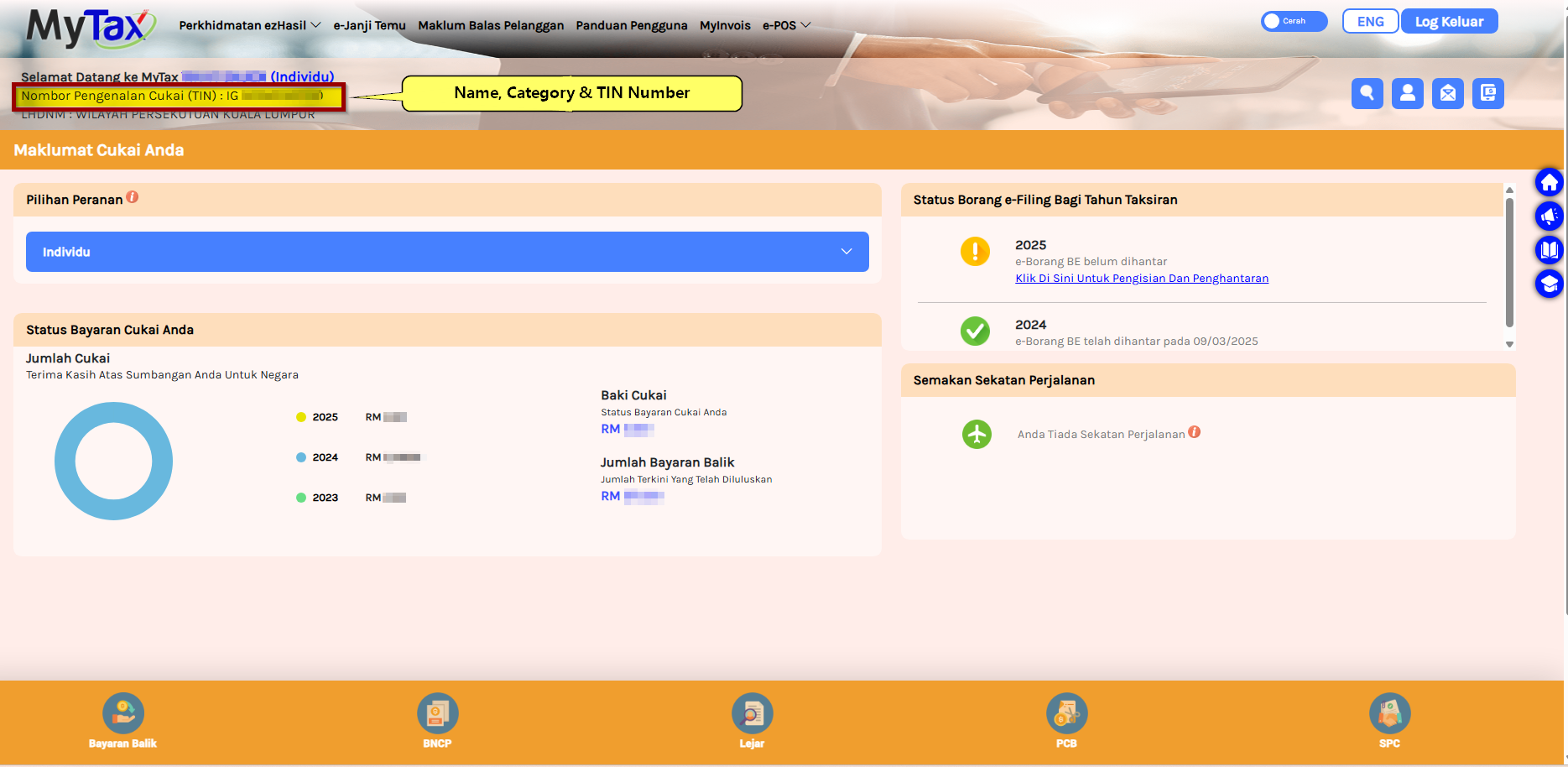
A TIN number is a combination of code and a set of numbers. For Individuals, the code starts with “IG” while for non-individuals, the codes are as follows: “C” for companies, “D” for partnerships, “E” for employers, and others. (Source: Lembaga Hasil Dalam Negeri Malaysia (LHDN))
TIN numbers can be checked by visiting the nearest HASiL branch or online via MyTax.
Tax Identification Number Malaysia: Who Needs One?
A tax identification number Malaysia applies to:
- Individuals earning taxable income
- Sole proprietors and partnerships
- Companies and LLPs
- Businesses registered for SST
- Entities issuing tax invoices or e-invoices (workflow)
Once issued, the TIN becomes the reference point across tax filings and related financial records.
Why is a Tax Identification Number Important for Businesses?
A tax identification number is not only a tax requirement. It underpins how financial records are matched, verified, and reviewed.
From a practical standpoint, a valid TIN supports:
- Correct invoice issuance
- Revenue tracking
- Audit trail integrity
- Regulatory reporting accuracy
Errors in TIN usage can lead to mismatches between invoices, payments, and accounting records.
How TIN Numbers Appear in Invoicing and Reporting
TINs are commonly required on:
- Tax invoices
- E-invoice submissions
- Credit notes and debit notes
- Supplier and customer records
As Malaysia moves toward broader e-invoicing adoption, structured data fields including TINs become more important for automated validation.
延伸阅读: How TIN, Payment Records, and Digital Systems Work Together
How Tax Identification Numbers Relate to Payments
Payment gateways do not issue or validate tax identification numbers. However, they generate transaction data that businesses later use for tax reporting.
This indirect relationship matters because:
- Payments create revenue records
- Revenue records must match invoices
- Invoices reference the business TIN
When business identity data is inconsistent, reconciliation becomes harder.
Payment Gateways and Compliance Readiness
Payment infrastructure supports:
- Capturing transaction amounts
- Timestamping payments
- Recording payer details
- Exporting reports to accounting systems
When aligned with accurate tax information, this data supports smoother downstream compliance processes.
Example of Payment Infrastructure in Malaysia
Payment gateways such as Paydibs are typically used to process online payments and maintain transaction records. These records can later be reconciled with invoices and accounting systems that reference a business’s tax identification number.
This does not make a payment gateway a tax tool. It highlights how clean payment data and accurate tax identity information work together in modern business operations.
TIN, E-Invoicing, and Digital Payments
E-invoicing increases the importance of consistent data across systems.
In a typical flow:
- An invoice is issued with a valid TIN
- A payment is collected through a gateway
- The transaction is recorded in accounting software
- Data is submitted for tax reporting
When any identifier is inconsistent, manual intervention is required.
Common Mistakes Businesses Make
- Using different business names across platforms
- Entering incorrect or outdated TINs on invoices
- Failing to reconcile gateway reports with tax records
- Treating tax data and payment data as separate silos
These issues often surface during audits or system migrations.
How to Keep TIN and Payment Records Aligned
Practical steps include:
- Standardising business identity details across systems
- Validating TIN accuracy before issuing invoices
- Reconciling payment gateway reports regularly
- Aligning accounting and invoicing software with payment data exports
These steps reduce friction without changing providers.
Conclusion: Why TIN Still Matters in a Digital Payment Environment
A TIN number in Malaysia remains a core compliance requirement, but its relevance extends beyond tax filing. As businesses rely more on digital invoicing and payment gateways, accurate tax identification supports cleaner records, clearer reconciliation, and fewer compliance issues.
Payment infrastructure and tax systems are separate, but they increasingly interact through shared data. Understanding this relationship helps businesses manage growth with fewer operational surprises.