Portable POS Terminals in Malaysia: Who They Are Suitable For
- 首页
- Payments & Fintech
- Portable POS Terminals in Malaysia: Who They Are Suitable For
免责声明: This article is for informational purposes only and does not constitute financial, tax, legal, or regulatory advice. Mention of specific providers or products is for illustration only and does not imply endorsement, warranty, or guarantee of suitability. Businesses should verify details with service providers before making decisions.
Key Takeaways
- A mini POS terminal is a compact, portable device used to accept in-person digital payments
- Mini POS terminals focus on mobility and ease of setup rather than full POS system features
- They typically support cards, contactless payments, and selected e-wallets
- Mini POS terminals are commonly used by small, mobile, or location-flexible businesses
- Choosing a mini POS depends on transaction volume, portability needs, and payment methods
Searches for mini POS device usually come from businesses that already know they want to accept card or contactless payments, but do not want a bulky countertop setup or complex system.
Mini POS terminals have grown in popularity as more businesses operate across pop-ups, temporary locations, service calls, or shared spaces. Despite the name, a mini POS terminal is not a simplified point-of-sale system. It is a payment acceptance device, designed for portability and ease of use.
This article explains what a mini POS terminal is, how it differs from other payment options, and which types of businesses typically find it suitable.
What is a Mini POS Terminal?
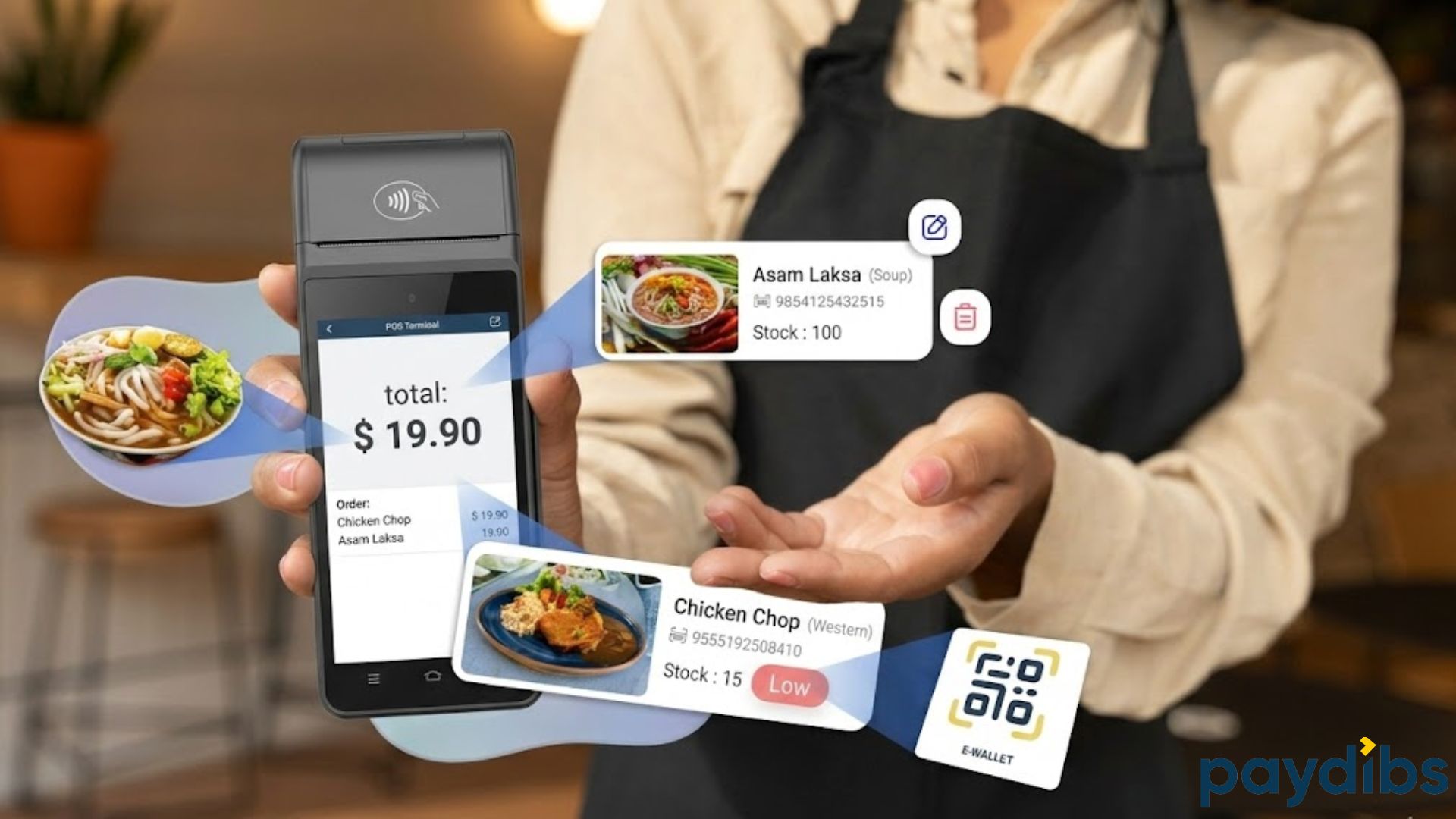
A mini POS terminal is a small, portable payment device that allows businesses to accept in-person electronic payments.
Unlike traditional countertop POS terminals, a mini POS terminal:
- Is lightweight and compact
- Often connects via Bluetooth or mobile data
- May pair with a smartphone or tablet
- Focuses on payment acceptance rather than inventory or billing
Its primary role is to process payments and record transaction data.
How Does a Mini POS Terminal Work?
A typical mini POS payment flow includes:
- The customer presents a card, phone, or contactless device
- The mini POS terminal captures payment details
- The transaction is authorised through payment networks
- Approval or decline is shown
- The transaction is recorded for settlement
Most mini POS terminals support:
- Debit and credit cards
- Contactless NFC payments
- Selected e-wallets
Actual support depends on the provider and configuration.
Mini POS Terminal vs Traditional POS Terminal
The key difference lies in form factor and use case, not payment capability.
Mini POS terminals:
- Are portable and battery-powered
- Suit mobile or flexible operations
- Have minimal hardware footprint
Traditional POS terminals:
- Are fixed or countertop devices
- Suit permanent locations
- Often integrate with full POS systems
Both process payments, but their operational context differs.
Mini POS Terminal vs QR-Only Payments
QR payments are often seen as an alternative, but they are not the same.
QR-only setups:
- Rely entirely on customer smartphones
- Do not accept cards
- Provide limited transaction detail
Mini POS terminals:
- Accept cards and contactless payments
- Generate structured transaction records
- Support customers without compatible wallets
Many businesses use both to maximise acceptance.
What Mini POS Terminals Do and Do Not Do
What they do:
- Process in-person digital payments
- Record transaction data
- Support settlement to a merchant account
What they do not do:
- Manage inventory
- Issue invoices
- File taxes
- Replace accounting software
Understanding these boundaries prevents incorrect expectations.
Who is a Mini POS Terminal Suitable For?
Mini POS terminals are commonly used by:
- Market and pop-up vendors
- Mobile service providers
- Small retailers with limited counter space
- Cafes and food stalls
- Event-based businesses
They are especially useful where flexibility matters more than system depth.
Mini POS Terminals and Transaction Records
Every mini POS transaction generates a digital record.
These records typically include:
- Transaction amount
- Date and time
- Payment method
- Reference or receipt number
While not tax tools, these records are often used for reconciliation, reporting, and audit support.
Mini POS Terminals and Business Reporting
Mini POS transaction data can also be:
- Exported for accounting purposes
- Matched to invoices
- Reviewed for sales tracking
Accurate transaction records reduce manual tracking, especially for mobile businesses.
Fees and Costs Associated With Mini POS Terminals
Costs may include:
- Transaction fees or merchant discount rates
- Device purchase or rental fees
- Settlement charges
Pricing structures vary depending on transaction volume and accepted payment methods.
Choosing a Mini POS Terminal in Malaysia
When evaluating options, businesses usually consider:
- Supported payment methods
- Portability and battery life
- Ease of setup
- Reporting access
- Customer support availability
The best choice depends on how and where payments are collected.
Example of Mini POS Infrastructure in Malaysia
Payment infrastructure providers such as Paydibs offer mini POS terminals designed to accept in-person payments in a compact form. These devices are commonly used by businesses that prioritise portability while still requiring card and contactless payment support.
This highlights how mini POS terminals fit into broader payment infrastructure rather than functioning as standalone business systems.
Common Misconceptions About Mini POS Terminals
- A mini POS terminal is not a full POS system
- A mini POS terminal does not replace invoicing software
- A mini POS terminal does not handle tax filing
- Smaller size does not mean limited payment security
Clear understanding helps avoid unsuitable purchases.
How Mini POS Terminals Fit Into a Broader Setup
Many businesses combine:
- Mini POS terminals for in-person payments
- Payment gateways for online sales
- Accounting software for reporting
- Invoicing tools for billing
Each tool supports a specific part of the workflow.
Conclusion: When a Mini POS Terminal Makes Sense
A mini POS terminal is designed for businesses that value mobility, simplicity, and flexible payment acceptance. It processes in-person payments and generates transaction records but does not replace invoicing, accounting, or compliance systems.
For businesses operating across locations or without fixed counters, understanding what a mini POS terminal does and does not do makes it easier to choose a setup that fits real operational needs.
FAQs About Mini POS Terminals in Malaysia
What is a mini POS terminal?
A mini POS terminal is a small, portable device used to accept in-person digital payments.
Can mini POS terminals accept cards?
Yes, most mini POS terminals support debit and credit card payments.
Are mini POS terminals suitable for small businesses?
Yes, they are commonly used by small or mobile businesses that need portable payment acceptance.
Do mini POS terminals support e-wallets?
Yes, the Paydibs Mini POS terminal supports various e-wallets, depending on the provider and the payment methods integrated into the system.
Is a mini POS terminal the same as a POS system?
No, a mini POS terminal focuses on payment acceptance, not full business management.
Do mini POS terminals handle tax or invoicing?
No, they process payments and generate transaction records but do not handle tax filing or invoicing.
近期文章
- Portable POS Terminals in Malaysia: Who They Are Suitable For
- Payment Link: Bridge Between Social Conversations and Sales
- How TIN, Payment Records, and Digital Systems Work Together
- Cross Border Payments in Malaysia: Settle International Payments Efficiently
- What is a Ready-to-Deploy Online Store Platform?
我们的合作伙伴 :






Paydibs 是一家领先的支付解决方案 提供商,致力于简化各种规模企业 的交易流程。